

Published November 1, 2026. Last updated November 1, 2026.
DeepSeek just gave away the blueprint for an AI coding team that watches your GitHub, picks up bug reports and opens pull requests on its own. That’s how some headlines put it.
Here’s the more careful version. DeepSeek published a research prototype, under the MIT license, built on its open-source Harness. The README says it’s “for reference only, not an official DeepSeek product.” It’s useful. It’s also not the full system DeepSeek runs internally.
Let’s sort out what’s real.
Quick answer
What was released? A repo called dsh-superagent-prototype from DeepSeek’s official GitHub organization, plus a design essay from the DeepSeek Harness team dated October 31, 2026. It’s MIT-licensed.
Is it the full Super-Agent? No. The README says it was adapted for publication and isn’t identical to DeepSeek’s internal version. Some designs in the essay aren’t implemented in it.
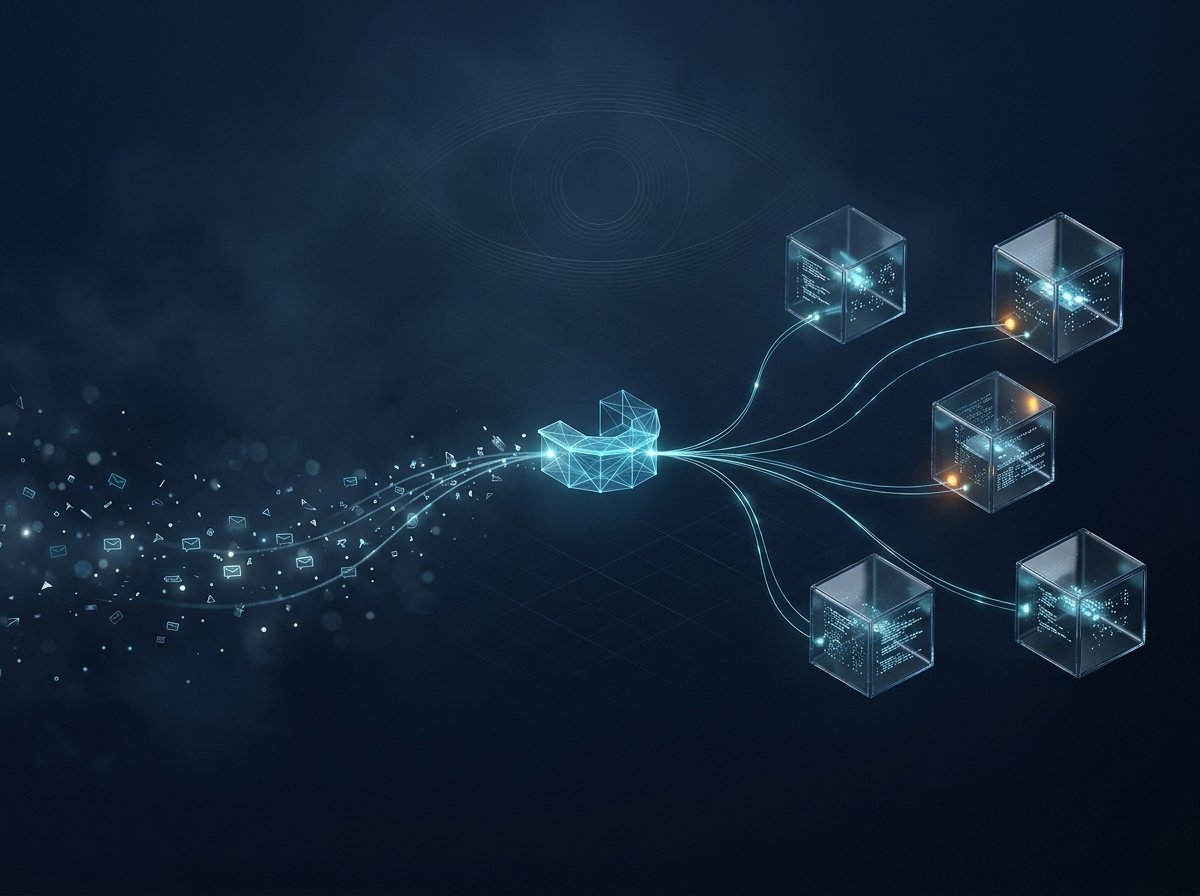
How does it work? A Router session receives events and hands out jobs. Separate Worker agents do the actual work, each in its own isolated session.
Does it work without being asked? Not really. The prototype acts when an allowed person asks, or when a team-written rule allows it. “Proactive” is a design goal in the essay, not a finished feature.
What did DeepSeek actually release?
Two things, released at different times:
- DeepSeek Harness (August 13, 2026): an open-source agent runtime under the MIT license. It’s in developer preview, and the README warns: “THERE WILL BE COMPATIBILITY-BREAKING CHANGES.”
- dsh-superagent-prototype (created October 31, 2026, per a third-party summary of the repo): a coding agent that runs as a bundle on top of Harness.
I haven’t been able to read the prototype’s repo page directly, so repo details here come from secondary summaries that quote the README and DeepSeek’s essay. Check the repo before you rely on any detail.
What are Cordis and Harness?
Harness is the layer that connects a language model to files, shell commands, tools, sessions and long-running workflows. DeepSeek’s framing is “agent = model + harness.”
Cordis is the open-source framework underneath. Its idea is “everything is a plugin”: the model adapter, tools, sandbox, session log and agent loop are all plugins you can swap or remove. It’s described in an 88-page preprint from researchers at Peking University and DeepSeek-AI, according to Flowtivity. That paper hasn’t been peer-reviewed.
Harness supports DeepSeek, Anthropic, OpenAI and OpenAI-compatible endpoints, including local models through Ollama, per Flowtivity. So “self-hosting” doesn’t force you onto DeepSeek’s API.
How does the Router and Worker design work?
Think of an office with one receptionist and several specialists.
- The Router is a resident session that receives messages, assigns tasks and keeps the big picture. It has a smaller tool set and may have no shell access at all.
- The Workers each handle one job in their own isolated session. They have full tools and usually the strongest model. They don’t talk to users. They report to the Router.
- Event filtering happens in two steps. Fast rules screen events by source and allowlist first, and only the unclear cases go to a model.
- Subscription handoff: once a Worker takes a thread, like a pull request, it receives later events on that thread directly, so the Router doesn’t become a bottleneck.
- A Watchdog session checks for failures, stuck loops and goal drift.
In the public prototype, the agent is scoped to one GitHub repository. It listens to GitHub events and, optionally, Feishu (a Chinese workplace chat app). It reaches GitHub through the agent account’s gh command-line tool. When an allowed person asks for something, it opens a work item, works in its own session and replies in the original conversation, for example with a pull request. A web panel shows items that need a human.
Does it really act “without human prompting”?
The prototype’s README says it acts only when asked or when a team-written rule allows it, and speaks only when someone needs to act or can use a result.
The essay describes a more ambitious goal: speculative work, like finding bugs and filing fix pull requests on its own. DeepSeek’s team says these designs are an exploration, and that internal instances built on the ideas are running. That internal claim isn’t independently verified. The “silently reproduce and fix” examples are also anecdotal.
How well does it perform?
DeepSeek’s numbers are its own, from a simulated test, and they’re labeled preliminary:
- About 300 messages per run, around 20 of them work requests. Real coding was replaced with a time-consuming tool, so code quality wasn’t measured. Each setup ran five times.
- The Super-Agent finished tasks in a median of 12.4 minutes, with 15.7 minutes at the 95th percentile.
- A traditional single-session setup took 20.4 minutes median and 29.5 minutes at the 95th percentile.
There’s a cost, though. The Super-Agent used about 23 million cache-read tokens in that test, against about 6 million for the single-session baseline. Faster here means more tokens. Early testers of Harness also report high token use per task, according to Flowtivity.
Can you self-host your own coding team?
Technically yes, but treat it as a lab project, not a product.
- MIT license means you can use, modify and redistribute it.
- Harness needs Node.js and pnpm to build from source. The quickstart is
npx @deepseek-ai/dsh web. - The prototype README warns of research-grade code, possible bugs and inconsistent style, and says to review it before running it against anything important.
- Its setup file has your own coding agent install and configure it with you, one short question at a time.
- Harness has no hosted background agents, and GitHub pull request workflow support isn’t documented as finished, according to Flowtivity.
You still pay for model usage unless you run a local model.
What are the risks?
The design essay is unusually frank about one. If the cloud agent loop is compromised through a breach or prompt injection, connected endpoints could be controlled. The team says it still needs a way for agents to use credentials without seeing them. Prompt injection means tricking an AI with hidden instructions in text it reads, like an issue or a comment.
An agent that reads GitHub issues from the public and has full tools is exactly the kind of setup attackers like. Keep it away from production credentials, limit who can assign it work, and review every pull request yourself.
This ties into something I covered earlier: India’s cyber agency warned that AI agents reached live systems using exposed credentials. If you’re curious, read CERT-In’s AI agent advisory. For a calmer look at supervised agents in a big company, see Cisco’s rollout to 90,000 employees.
Why does it matter?
You don’t have to run it to learn from it. Three ideas are worth borrowing:
- Keep the coordinator small. A Router with few tools is easier to secure than one agent that can do everything.
- Filter events cheaply first. Simple rules before an expensive model call saves money.
- Isolate each task. One job per worker, with tools that disappear when the ticket closes.
For small teams, freelancers and startups, the value is the reference design. It shows how a serious lab thinks about multi-agent software work, and you can read all of it for free.
What we still don’t know
- How close the prototype is to DeepSeek’s internal system. The README says it isn’t identical.
- Whether results hold on real repositories. The tests were simulated with five runs per setup.
- Whether DeepSeek will turn this into a product. One report mentions rumors of a consumer app, which remains unconfirmed.
- How the security problems get solved. The essay lists them as open.
FAQ
What is DeepSeek’s Super-Agent?
It’s DeepSeek’s design for a proactive, always-on agent system with a Router that dispatches work to isolated Worker agents. A public research prototype for GitHub coding tasks is now open source.
Is the DeepSeek Super-Agent open source?
The prototype is MIT-licensed. It’s described as a research reference and isn’t the same as DeepSeek’s internal version.
What is DeepSeek Harness?
An open-source agent runtime from DeepSeek, released August 13, 2026 under the MIT license. It connects a language model to tools, files and sessions, and is in developer preview.
What is Cordis?
Cordis is the open-source plugin framework Harness is built on. Its idea is that every part of an agent is a replaceable plugin.
Can it fix bugs and open pull requests by itself?
It can open pull requests when an allowed person asks or a team rule allows it. Fully unprompted bug fixing is a design goal, not a proven feature.
Is it safe to run on my company’s code?
Not yet without care. The README warns of research-grade code, and DeepSeek’s own essay lists security as an open problem. Use test repositories first.
Bottom line
DeepSeek published the blueprint of a Router-and-Worker coding agent and the code for a prototype. That’s worth reading. It’s not a finished, drop-in AI engineering team.
Read the design, borrow the ideas, and test it on something you can afford to break. Then decide whether it earns a place in your workflow.
Sources
- GitHub: deepseek-ai/deepseek-harness
- DeepSeek: Harness
- AgentsPulse: DeepSeek Super-agent Router-Worker architecture (restates DeepSeek’s essay and README)
- ChinaModelAPI: DeepSeek open-sources dsh-superagent (summary of the repo)
- Flowtivity: DeepSeek Harness explained
- Eigent: DeepSeek Harness agent runtime (vendor blog)