
Google Just Launched Gemini 4 Argon — And Now Anyone Can Build an Android App by Just Describing It
Google dropped two announcements on the same day, and most coverage treated them as separate stories. They’re not. Put together, they’re the clearest signal yet of where app development is heading, and it’s worth understanding both pieces before you decide whether this changes anything for your own work.
What Gemini 4 Argon Actually Is
Argon is Google’s new frontier reasoning model, and it’s built for a specific kind of hard problem: large-scale codebase refactoring, mathematical optimization, multi-step agent planning. Not chatbot small talk. Real engineering work that used to need a senior developer sitting with the code for days.
That distinction matters. A lot of AI models are generalists first, coders second. Argon is positioned the other way — reasoning depth aimed squarely at the kind of work that breaks weaker models: following a change across dozens of files, keeping a plan coherent across many steps, catching the kind of edge case a junior dev misses.
The Bigger Story: Google Play Vibe Coding
Here’s the part that actually changes something for non-developers. Google built “Vibe Coding” directly into Google AI Studio, and it runs on Argon under the hood.
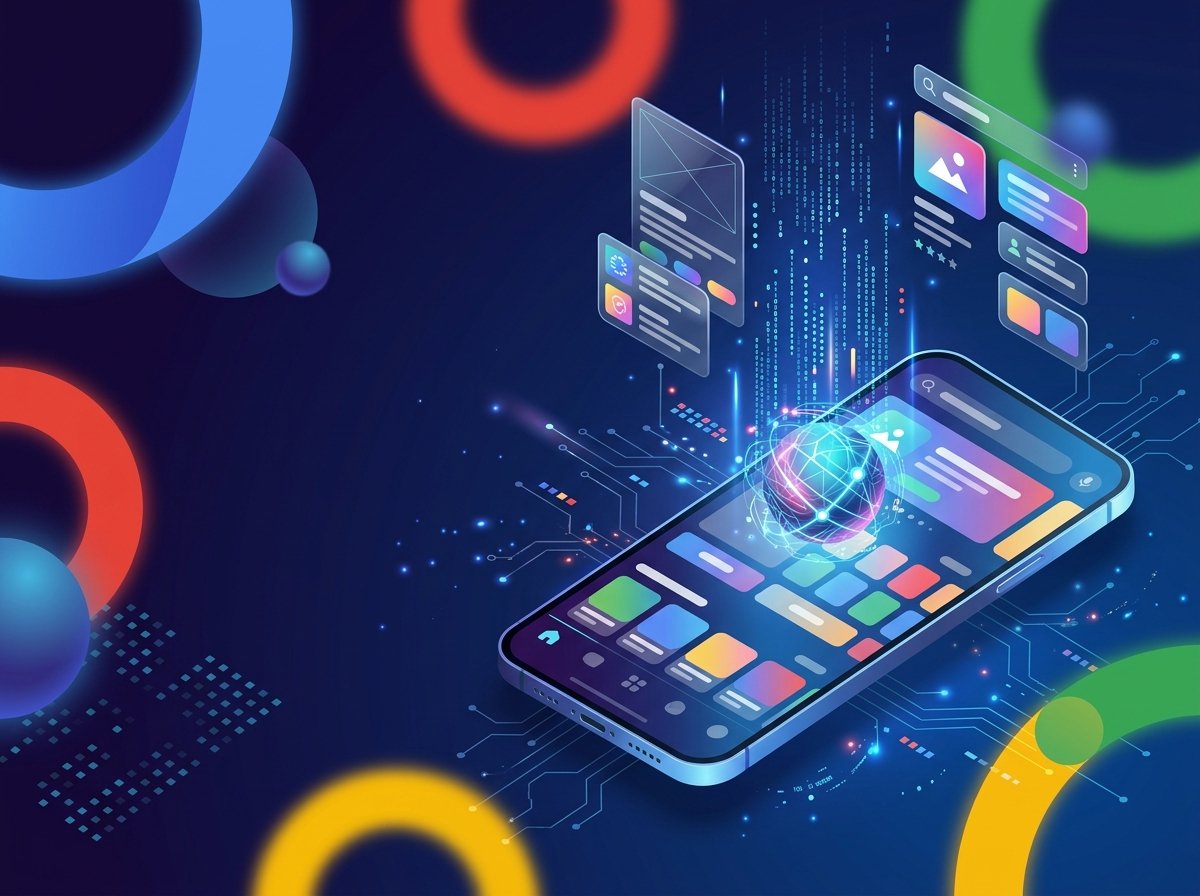
The pitch is simple: describe the app you want in plain language. Gemini builds it, tests it, and deploys it straight to Google Play as a native Android app. No developer account fees. No standard Google account restrictions beyond what you’d already have.
Think about what that actually removes. The traditional path to publishing an Android app means learning Kotlin or Java, setting up a dev environment, paying the developer registration fee, and surviving Play Store review on your own. Vibe Coding collapses most of that into a conversation.
Why This Matters, Beyond the Headline
The barrier to shipping software just dropped hard. This isn’t “AI helps you code faster” — that’s been true for a while. This is “you don’t need to code at all” for a real class of apps. A small business owner who wants a simple booking app, a creator who wants a companion app for their content, a shop owner who wants an inventory tool — all of that is now a prompt away from being live on the Play Store.
It’s going to flood the Play Store with low-effort apps, fast. Lowering the barrier this much always has a second-order effect: quality gets harder to find in the noise. Expect Google to tighten review and ranking signals as a direct response to this, probably within months, not years.
For actual developers, this changes the competitive floor, not the ceiling. A natural-language-generated app still needs real engineering for anything beyond a simple utility — proper backend architecture, security review, scaling, nuanced UX. Vibe Coding eats the bottom of the market. It doesn’t touch complex, high-stakes software. If your work lives at that bottom tier, this is the moment to move up the value chain.
This is a distribution story as much as a creation story. Plenty of no-code tools have let people build apps for years. What’s new here is direct deployment to Google Play, inside Google’s own ecosystem, with Google’s own model doing the building. That’s a different thing than a third-party builder — it’s the platform owner removing the friction from its own store.
What To Actually Do With This
If you’ve been sitting on an app idea because you don’t code, the barrier that stopped you is mostly gone now. Test it. The cost of trying is close to zero.
If you build apps for a living, don’t panic, but don’t ignore it either. The simple-app segment is about to get genuinely crowded with AI-generated competition. Where you add real value — architecture, security, complex integrations, actual product judgment — is where you stay relevant.
If you’re evaluating AI models for coding work generally, Argon joining the frontier reasoning tier is worth testing against whatever you’re currently using for refactoring or planning-heavy tasks. Reasoning-focused models tend to behave differently than general-purpose ones on exactly that kind of work.
Bottom Line
Gemini 4 Argon is a serious reasoning model aimed at hard engineering problems. Google Play Vibe Coding is what happens when you point that model at the specific job of turning a plain-language description into a published Android app. Together, they mark a real drop in the barrier to shipping mobile software — not a marginal improvement, a structural one. The Play Store is about to get a lot more crowded, and the real question for anyone in this space isn’t whether to pay attention — it’s how fast to adjust.
Sources: