

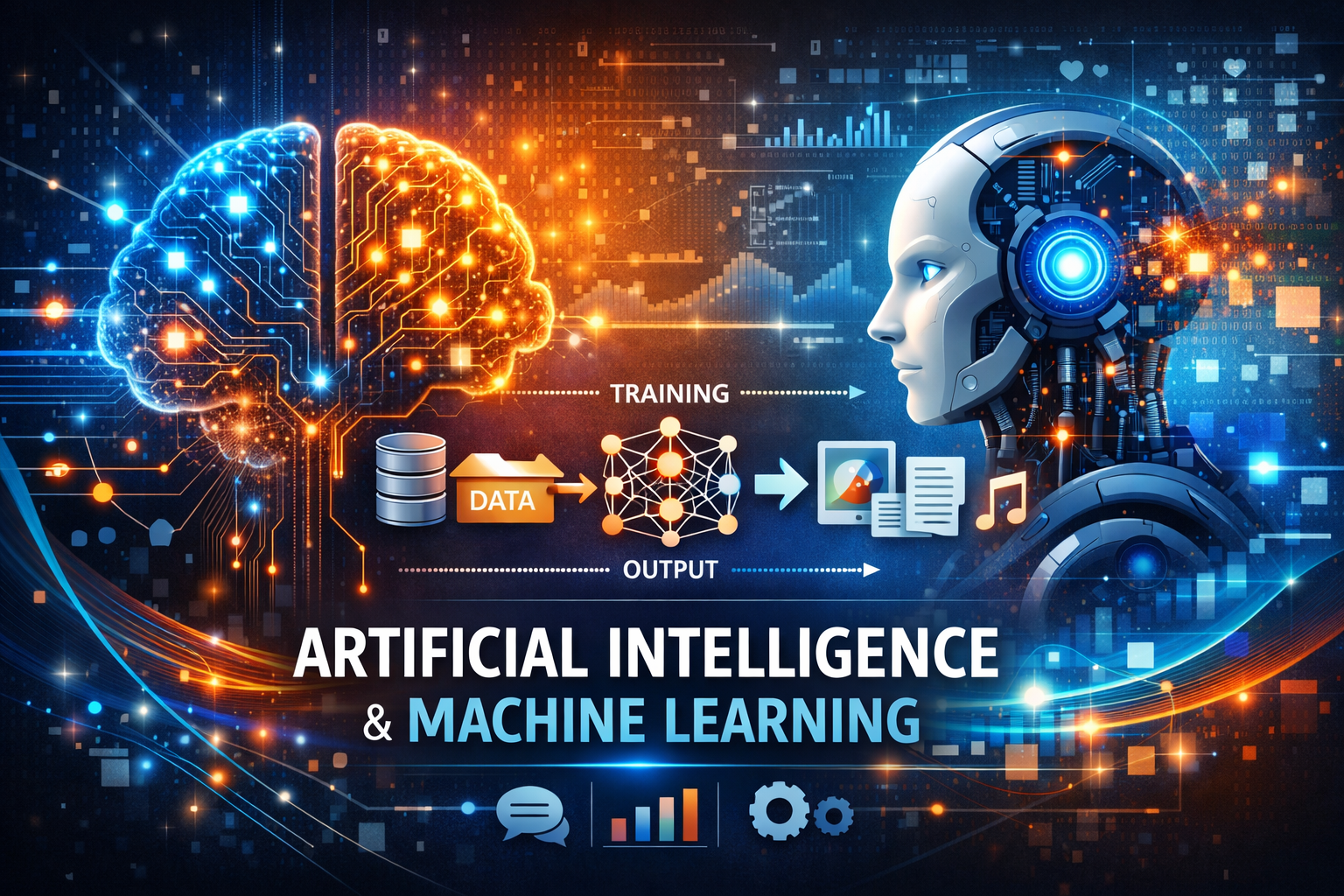
Every time I use ElevenLabs for a voiceover or a store’s recommendation engine suggests a product, machine learning is running underneath. Here’s what’s actually happening, explained with tools I use every week instead of abstract examples.
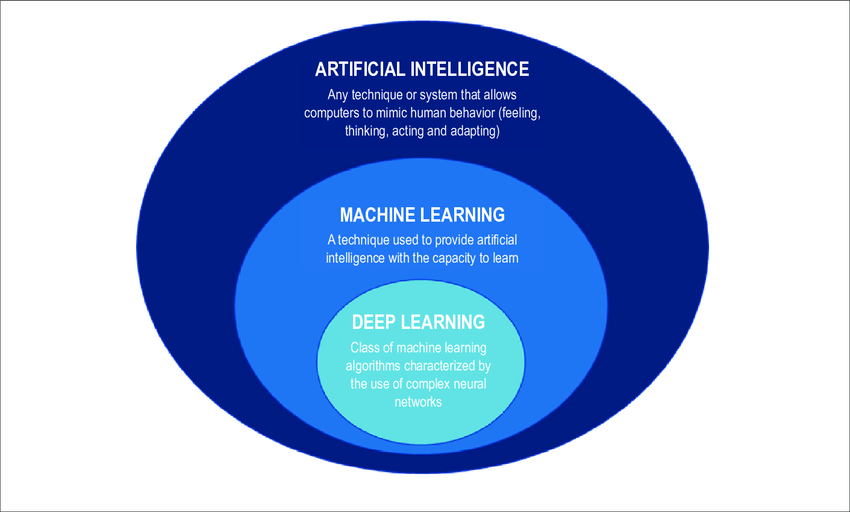
AI vs Machine Learning: The Actual Difference
Artificial intelligence is the broad goal — building systems that do things normally requiring human intelligence: recognizing patterns, making decisions, understanding language. Machine learning is one specific way to get there — instead of programming every rule by hand, you feed a system data and let it find patterns on its own.
Generative AI — the ChatGPT, Claude, and image tools most people actually interact with — relies heavily on machine learning. That’s how a text tool learns to write coherently, or a voice tool like the one I use for my Urdu videos learns to sound natural instead of robotic.

The Three Ways Machine Learning Actually Trains
Supervised learning uses labeled examples — data where the correct answer is already known. Think of training a spam filter: you show it thousands of emails already marked “spam” or “not spam,” and it learns the patterns that separate them. Most business AI tools — including the recommendation engines running on my ecommerce stores, trained on labeled purchase history — work this way.
Unsupervised learning works without labels — the system finds structure on its own. If you fed it years of customer purchase data with no labels at all, it could group customers into natural segments based on shared behavior, without you telling it what to look for in advance. This is genuinely useful for spotting patterns you didn’t know to ask about.
Reinforcement learning trains through trial and error, with feedback guiding future behavior — correct actions get reinforced, mistakes get corrected. This is less common in everyday business tools, more common in things like game-playing AI or robotics, where the system needs to improve through repeated attempts rather than a fixed labeled dataset.

An Important Distinction Most People Get Wrong
AI tools don’t learn from your individual conversations with them in real time. The learning happens during training, before the tool is ever released to you. When you use ChatGPT, Claude, or any AI writing tool, it’s applying what it already learned — it’s not adjusting its core knowledge based on your specific chat, even though it might feel that way.
This matters practically: if an AI tool gives you a wrong answer today, correcting it in that conversation doesn’t fix the underlying model for next time. The company behind the tool has to retrain or update it separately. Knowing this changes how you think about relying on AI output — it’s applying fixed, trained knowledge, not adapting live to you specifically.
Rule-Based AI: The Older, Simpler Approach
Not everything called “AI” uses machine learning at all. Rule-based systems follow fixed instructions written by a developer — “if the customer types X, respond with Y.” Basic chatbots and simple automated responses often work this way. It’s predictable and easy to build, but it can’t handle anything outside what was explicitly programmed.
Machine learning-powered systems, by contrast, can handle situations they weren’t explicitly told about, because they learned general patterns instead of following a fixed script. This is exactly why modern AI tools feel more flexible than the rigid customer-service bots of a decade ago.
Where This Actually Shows Up in Real Business Use
Recommendation engines on ecommerce stores — including my own — use supervised learning on past purchase and browsing data to suggest what a specific customer might want next.
Voice generation tools like the ElevenLabs voiceovers I use for video content are trained on massive labeled voice datasets, learning to reproduce natural speech patterns rather than following a fixed script of sounds.
Content and SEO tools that suggest keywords or analyze competitor content are typically pattern-matching against huge labeled datasets of what ranks well — supervised learning applied to search behavior.
Fraud detection on payment platforms often uses a mix of supervised learning (known fraud patterns) and unsupervised learning (spotting genuinely new, unusual patterns nobody explicitly labeled yet).
Why This Actually Matters for You
You don’t need to build machine learning models yourself to benefit from understanding this. Knowing the difference between supervised, unsupervised, and reinforcement learning helps you evaluate AI tools more critically — a tool trained on labeled data will behave predictably within that scope, but may fail badly on something genuinely outside its training data. That’s exactly the kind of gap where AI confidently gives wrong answers, which is worth watching for in any tool you rely on for real business decisions.
A Resource Worth Checking Out
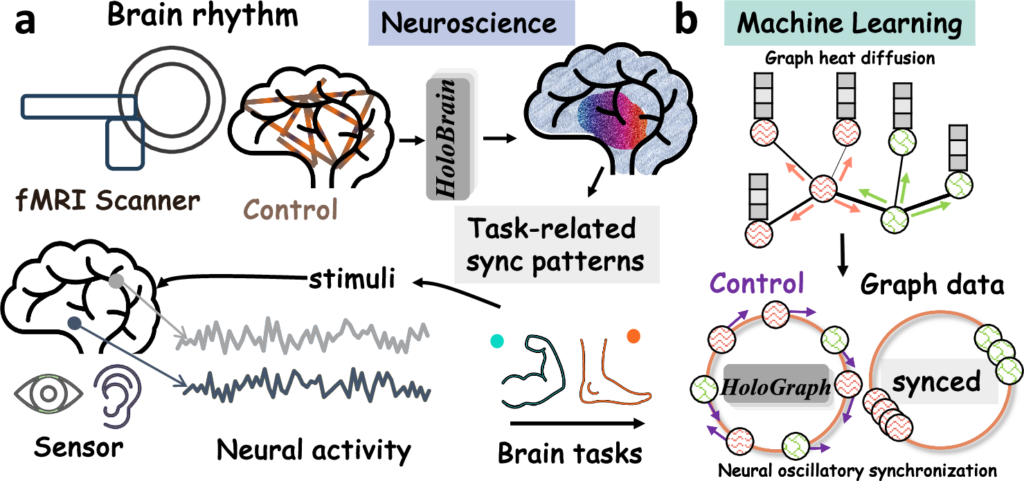
If you want to actually see these concepts visually instead of just reading about them, Google’s PAIR Explorables offers genuinely good interactive visualizations of how these systems work — worth a look if this topic interests you beyond this overview.
Bottom Line
Machine learning is the engine behind most modern AI tools — supervised learning for predictable, labeled tasks, unsupervised for finding patterns nobody explicitly defined, and reinforcement learning for trial-and-error improvement. None of it learns from you in real time during a single conversation — it’s applying what it learned during training. Understanding this distinction helps you use AI tools more critically, not just more often.